
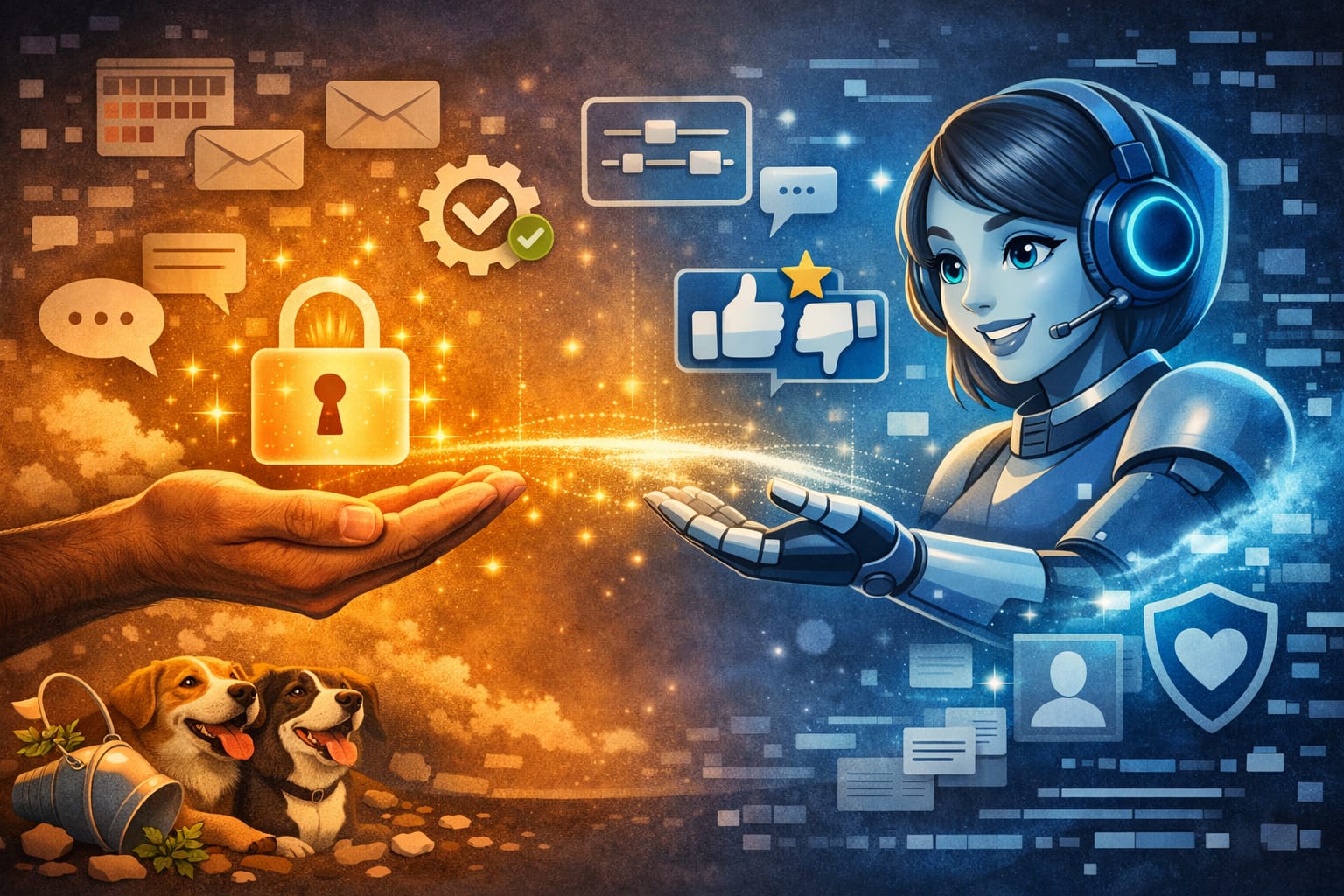
Trust is one of the most human things we experience, yet it’s increasingly mediated by systems that aren’t human at all. We rely on digital tools to organize our days, store our memories, guide our decisions, and even shape our creative work. But trust in technology doesn’t emerge from the same place as trust in people. It’s not built through shared experiences or emotional resonance. It’s built through design.
And design, in this context, isn’t about aesthetics. It’s about behavior.
Digital systems earn trust when they behave in ways that feel predictable, transparent, and aligned with human expectations. When they don’t, even the most powerful technology becomes something we hesitate to use.
Understanding how trust forms — and how it breaks — is becoming essential as AI systems move from optional tools to everyday companions.
The Psychology Behind Trusting Machines
Humans don’t trust machines because they’re smart. We trust them because they’re consistent. A system that behaves the same way today as it did yesterday feels safe. It becomes part of the mental model we use to navigate our environment.
When a system behaves unpredictably, even if the outcome is technically correct, it creates friction. That friction isn’t just cognitive — it’s emotional. It’s the same discomfort we feel when someone we know suddenly acts out of character.
This is why trust in digital systems is less about capability and more about coherence.
- A calendar assistant that occasionally rearranges events without explanation feels intrusive.
- A recommendation engine that suddenly shifts tone feels manipulative.
- An AI that performs tasks without clear triggers feels unsettling.
Predictability is emotional safety. And emotional safety is the foundation of trust.
Transparency as a Design Principle
Transparency doesn’t mean showing users every line of code or every decision tree. It means making the system’s behavior understandable.
When a digital system explains why it did something — even briefly — it becomes easier to accept the action. The user doesn’t feel overridden; they feel informed.
Transparency can be as simple as:
- “I moved this meeting because you usually prefer mornings for deep work.”
- “This suggestion is based on your recent reading history.”
- “I prioritized this notification because it came from a contact you frequently respond to.”
These small explanations transform an opaque system into a collaborative one. They shift the relationship from “the machine decided” to “the machine assisted.”
And assistance is far easier to trust than authority.
Feedback Loops: The Heartbeat of Reliability
Humans trust systems that listen.
A feedback loop — even a simple one — signals that the system is responsive, adaptable, and aware of the user’s preferences. It shows that the user’s input matters.
This can take many forms:
- Correcting a misinterpreted command
- Adjusting a routine based on user behavior
- Learning from repeated actions
- Offering alternatives when confidence is low
When a system acknowledges mistakes and adjusts accordingly, it becomes more trustworthy than one that tries to appear flawless. Perfection is suspicious. Adaptation is reassuring.
The most trusted digital systems aren’t the ones that never fail. They’re the ones that fail gracefully.
The Emotional Architecture of Trust
Trust isn’t just functional — it’s emotional. A system that feels respectful, predictable, and aligned with the user’s intentions creates a sense of comfort. It becomes part of the user’s cognitive environment.
This emotional architecture is shaped by:
- Tone — systems that communicate clearly and calmly feel safer
- Boundaries — systems that avoid overreach feel respectful
- Timing — systems that intervene at the right moment feel helpful
- Presence — systems that stay unobtrusive feel considerate
When these elements align, the system becomes more than a tool. It becomes a partner in the user’s workflow.
Not a human partner — but a reliable one.
Trust in the Age of AI
AI systems amplify all the challenges of trust because they operate with autonomy. They make decisions, interpret context, and act on behalf of the user. This autonomy is powerful, but it’s also delicate.
For AI to be trusted, it must:
- Act predictably
- Explain decisions
- Respect boundaries
- Learn responsibly
- Avoid assumptions
- Stay aligned with user intent
The more capable an AI becomes, the more important these principles are. Capability without clarity creates anxiety. Capability with clarity creates confidence.
The future of AI isn’t just about intelligence. It’s about trustworthiness.
Designing Systems People Can Rely On
Trust isn’t a feature — it’s an outcome. It emerges from the cumulative experience of interacting with a system that behaves in ways humans intuitively understand.
Designing for trust means designing for:
- Consistency
- Transparency
- Responsiveness
- Boundaries
- Emotional comfort
When these elements come together, digital systems stop feeling like black boxes and start feeling like reliable companions.
And in a world where AI is becoming part of daily life, reliability is the most human thing a machine can offer.

Leave a Reply