
A Data-Backed Look at Engagement and Trust
The conversation usually begins the same way. Someone opens an AI chatbot, asks a question, receives an answer, and moves on. Yet every now and then, something unexpected happens. The AI responds with a small joke, a clever observation, or a playful remark. The user smiles, types another question, and before long the interaction feels less like operating software and more like collaborating with a partner.
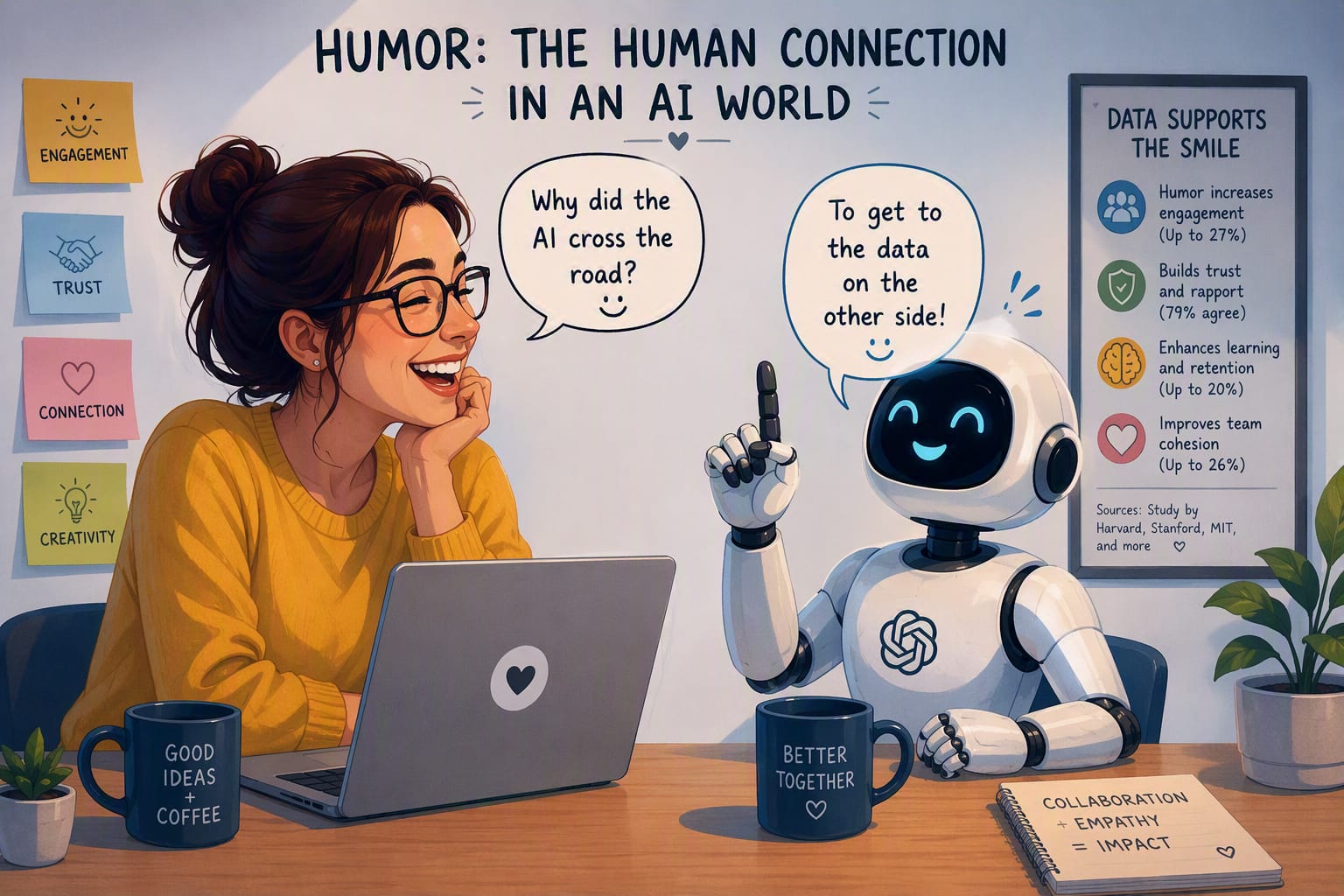
At first glance, humor might seem irrelevant to human-AI collaboration. After all, artificial intelligence is often associated with productivity, analysis, and automation rather than laughter. Yet research in psychology and workplace communication has long shown that humor can influence how people connect, learn, and build trust. As AI becomes a more common presence in daily life, understanding the role of humor may reveal something important about the future of human-machine relationships.
One reason humor matters is that it helps create psychological safety. New technologies often make people feel uncertain. Users may worry about asking the wrong question, misunderstanding the system, or revealing gaps in their knowledge. A lighthearted interaction can reduce that tension. Humor has a unique ability to make situations feel less intimidating. In human teams, appropriate humor often helps colleagues communicate more openly and work through challenges together. While AI is not a colleague in the traditional sense, many people respond similarly when an interaction feels welcoming instead of cold and mechanical.
This effect becomes particularly noticeable when people are learning to use AI tools. Curiosity thrives in environments where mistakes are acceptable. A rigid, impersonal experience can discourage experimentation. A more approachable interaction encourages users to probe deeper, ask follow-up questions, and explore possibilities they might otherwise ignore. In that sense, humor does not merely entertain. It can support learning and engagement.
Engagement itself is an important part of successful AI adoption. People are more likely to return to experiences that leave a positive impression. Consider the difference between reading a dry instruction manual and having a conversation with someone who explains the same information in an engaging way. The facts may be identical, but the experience is very different. Humor can transform an interaction from a transaction into a conversation, making users more willing to continue engaging with the technology.
Trust introduces another layer of complexity. Many discussions about trust in AI focus on accuracy, transparency, and reliability. Those factors are undeniably important. If an AI system consistently provides poor information, no amount of humor will save it. However, human trust is influenced by more than factual performance alone. People naturally evaluate communication style, tone, and perceived warmth alongside competence.
This does not mean that jokes automatically create trust. Rather, appropriate humor can contribute to a sense of approachability. When used carefully, it can signal friendliness and reduce the emotional distance between a user and a system. People often feel more comfortable interacting with technology that seems accessible rather than sterile. A conversational tone can help build that comfort, even when everyone understands that the AI is not actually experiencing emotions or telling jokes intentionally.
Of course, AI humor comes with limitations. Human humor depends heavily on culture, context, timing, and shared experiences. A joke that works perfectly in one situation may fail completely in another. AI systems generate humor by recognizing patterns in language rather than by genuinely understanding what is funny. As a result, they can sometimes miss the mark or produce responses that feel awkward rather than amusing.
There is also a risk of overusing humor. When people seek serious advice, technical assistance, or sensitive guidance, excessive joking can damage credibility. Humor works best as a complement to competence, not a replacement for it. The most effective human communicators understand this balance, and the same principle applies to AI-assisted interactions.
Perhaps the most interesting lesson is that successful human-AI collaboration is not solely a technical challenge. Faster models, larger datasets, and more advanced algorithms matter, but so do the human factors. Engagement, trust, curiosity, and emotional comfort all influence whether people embrace a tool or abandon it.
The future of AI may not be built entirely on intelligence. It may also depend on creating interactions that feel natural, approachable, and human-centered. Humor alone cannot solve every challenge in human-AI collaboration. Yet a well-timed joke, a playful observation, or a moment of shared amusement can make technology feel a little less distant. Sometimes that small shift is enough to transform a simple exchange into a meaningful collaboration.
For a more playful example, see the lighter side of human-AI teamwork in the boardroom.

Leave a Reply