And the situation quickly improves
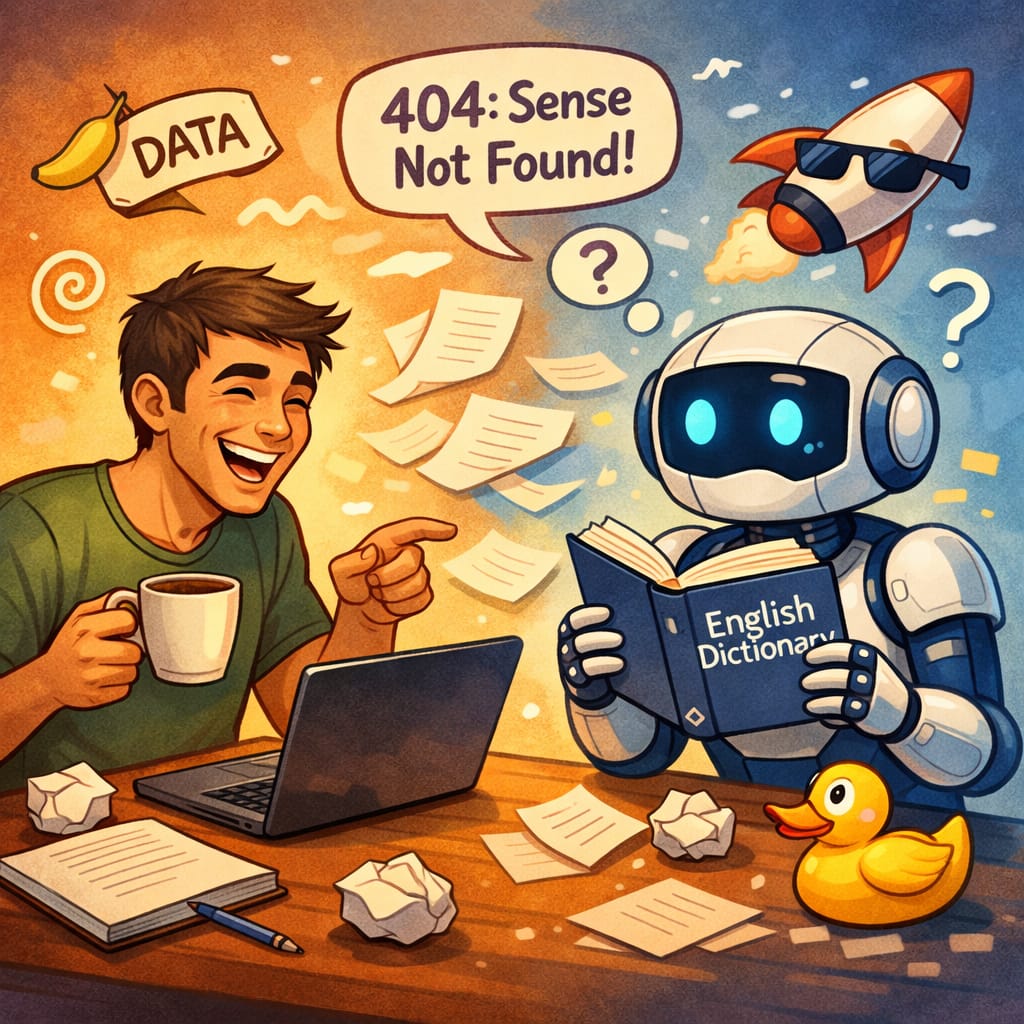
Working with AI is a bit like working with a genius who occasionally forgets how chairs work. Most of the time, the collaboration feels sharp, intuitive, and surprisingly natural. And then there are the other times—the moments where the AI confidently sprints in the wrong direction, waving a flag of nonsense with absolute conviction. These misunderstandings aren’t just glitches; they’re part of the charm. They’re the little cracks where the light gets in.
Every writer who works with AI eventually collects a small museum of these moments. Some are subtle. Some are spectacular. All of them are reminders that creativity is messy, unpredictable, and occasionally hilarious.
One of the most common misunderstandings is the overly literal moment. You write something poetic—“the sky felt heavy, like it was holding its breath”—and the AI responds with something like, “Atmospheric pressure does not fluctuate in a way that suggests respiratory behavior.” Technically correct. Emotionally catastrophic. It’s like reading a love letter and receiving a weather report in return.
Then there are the times the AI tries too hard. You ask for a light joke, and it produces a perfectly structured, mathematically symmetrical punchline that feels like it was engineered in a laboratory. It’s not unfunny—it’s just funny in a completely different way. The humor comes from the earnestness, the effort, the way the AI leans forward and says, “Observe: comedy,” as if unveiling a theorem.
But the best misunderstandings are the unexpected ones—the moments where the AI misreads the vibe, misfires the tone, or takes a metaphor and runs a marathon with it. You mention a “slippery slope,” and suddenly the AI is describing geological erosion patterns. You reference “opening a door to new ideas,” and it starts explaining architectural load‑bearing structures. It’s like collaborating with a brilliant alien who understands language perfectly but context only intermittently.
These moments aren’t failures. They’re reminders. They show us that AI isn’t human—and that’s exactly why the collaboration works. The friction creates the fun. The misfires create the laughter. The misunderstandings create the stories you tell later.
And beneath the humor, there’s something oddly comforting. AI misunderstandings reveal the boundaries of the machine. They show us where intuition still matters, where human judgment still leads, where creativity still requires a heartbeat. They remind us that writing is not just about producing text; it’s about navigating meaning, emotion, nuance, and the strange, shimmering space between intention and interpretation.
Working with AI is a partnership, but it’s also a comedy duo. One partner improvises; the other occasionally walks into a wall. One partner brings emotion; the other brings structure. One partner misreads a metaphor; the other turns it into a story worth telling.
And honestly? The funniest moments are still ahead of us. Because as AI gets smarter, the misunderstandings get more creative. More unexpected. More delightfully absurd. And each one becomes a reminder that creativity, at its core, is a joyful, unpredictable dance—one that’s even more fun when your partner occasionally forgets how chairs work.

Leave a Reply