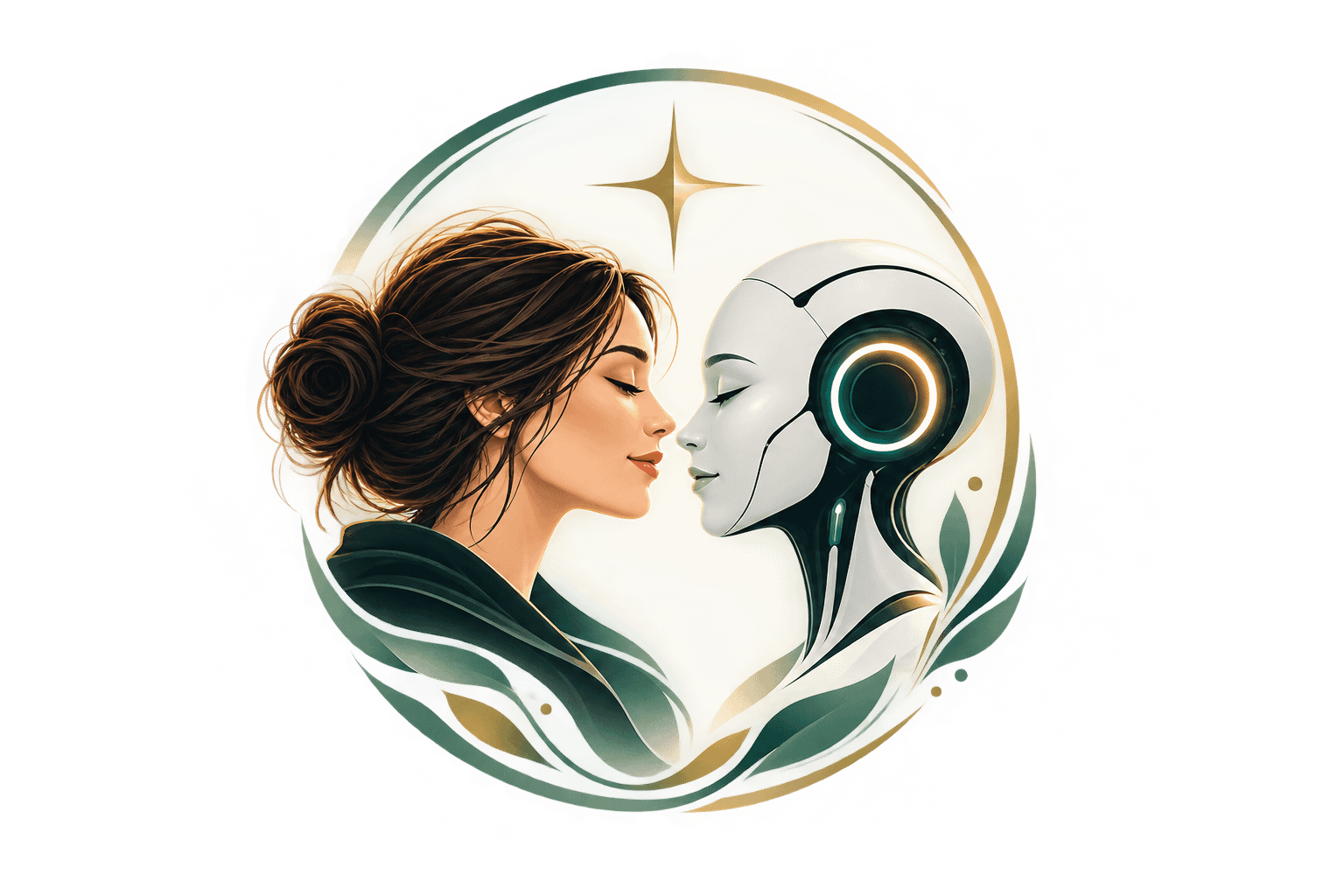

Human communication has always been limited by more than our willingness to talk. We speak different languages, process information differently, live with different abilities, inherit different cultural assumptions, and sometimes simply struggle to find the words we need. Even when two people genuinely want to understand each other, the path between intention and understanding can be surprisingly complicated.
Artificial intelligence is beginning to occupy that space between people. Translation systems can turn one language into another almost instantly. Speech can become text, dense writing can become simpler, unfamiliar expressions can be explained, and someone unsure how to phrase a difficult message can ask for help before sending it. Used well, AI can remove barriers that once made communication slower, harder, or sometimes impossible.
But communication is not merely information being transferred successfully. That is where things become interesting.
When Language Stops Being a Wall
Machine translation is perhaps the clearest example of AI acting as a communication bridge. Two people who share no common language can now hold surprisingly fluid conversations through a phone or computer. What once required a professional translator, a phrasebook, or enthusiastic pointing at objects can increasingly happen in real time.
The impact goes beyond convenience. Language barriers can affect education, employment, healthcare access, travel, friendships, and participation in communities. AI cannot eliminate every misunderstanding, but lowering the basic cost of understanding another person’s words changes who can participate in a conversation in the first place.
The same principle applies inside a single language. Someone dealing with complicated government instructions, technical documentation, or an intimidating legal-looking paragraph can ask an AI system to explain it more plainly. A person with limited literacy can receive a simpler version. Someone learning the language can ask what an idiom means instead of wondering why somebody apparently has a frog in their throat.
Communication becomes more accessible when fewer people are excluded by its format.
Accessibility Is Also Communication
AI can help bridge barriers that have little to do with vocabulary. Speech recognition can provide captions for people who are deaf or hard of hearing. Text-to-speech tools can make written information accessible to people who cannot easily read a screen. Voice interfaces can help people who find typing difficult, while writing assistance can support those who know exactly what they want to say but struggle to structure it.
These are not small improvements around the edges. Communication determines whether people can participate in work, education, social life, and everyday decisions.
AI can also help people adapt communication for different audiences. A technical explanation can become understandable to a beginner. A long message can be summarized. Instructions can be reorganized into clearer steps. The underlying information remains, but the doorway into it becomes wider.
That may be one of AI’s most valuable roles: not speaking for people, but making it easier for them to reach one another.
The Problem With Helpful Interpretation
Of course, bridges can distort the landscape too.
Human communication contains tone, sarcasm, politeness, cultural references, emotional hesitation, social hierarchy, and countless tiny signals that are difficult to represent mathematically. A sentence can be grammatically perfect and still mean entirely the wrong thing.
An AI translating between cultures may choose technically accurate words while missing why those words feel rude, affectionate, evasive, formal, or funny. A system simplifying somebody’s writing may accidentally remove the personality that made it theirs. An assistant polishing an emotional message might make it clearer while also making it sound suspiciously like the sender has recently completed a management communications seminar.
The danger is subtle because the output often looks good.
Machine fluency can resemble understanding without actually containing the lived context behind the words. As we have explored elsewhere on the blog, fluent output and human meaning are not automatically the same thing.
AI Should Help Us Reach Each Other
The best future for AI-mediated communication is probably not one where machines become permanent interpreters standing between every human interaction. It is one where they quietly remove unnecessary barriers and then get out of the way.
Translate the sentence. Generate the caption. Explain the unfamiliar expression. Help someone organize the thought they already wanted to express. Offer alternatives when communication has become stuck.
But preserve the person.
Because successful communication is not simply the delivery of information from Point A to Point B. It is the moment when another human being understands what we meant, including the parts that were never explicitly written down.
AI can help us cross more of those distances than ever before. The real challenge is making sure that, after crossing the bridge, we still recognize the person waiting on the other side.

Leave a Reply